Yara Simmons · 18 October 2026
Tracing the Influence of Scheduled Community Resets on Loyalty Metrics in Hobby-Focused Online Platforms
Scheduled community resets involve deliberate wipes of user progress, rankings, or accumulated data at fixed intervals in hobby-focused online platforms, and these events reshape how participants measure their engagement over time. Data from multiple platform analytics tools shows that such resets occur most frequently in gaming, crafting, and collecting communities where progress tracking forms a core mechanic. Researchers have observed that these cycles often align with seasonal events, allowing platforms to refresh content while users rebuild their standing from a shared baseline.
How Resets Operate in Hobby Platforms
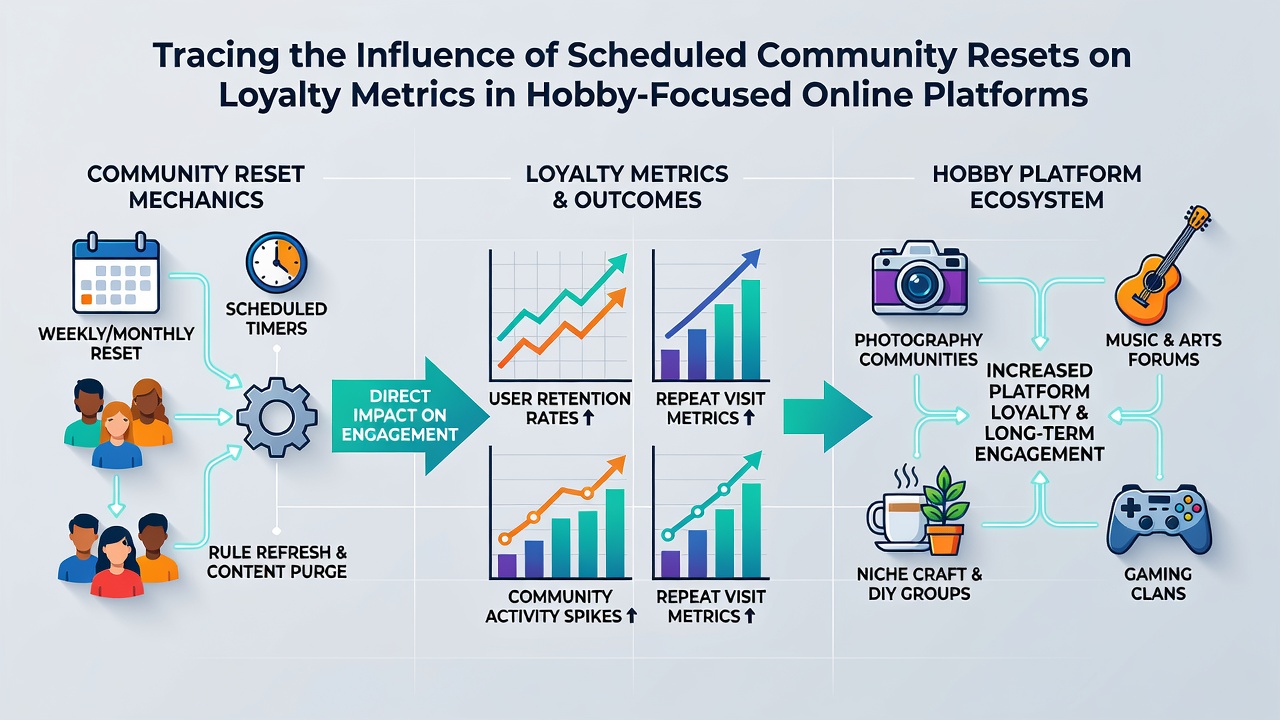
Platforms implement resets through automated scripts that clear leaderboards, inventory logs, and achievement histories every three to six months, yet they preserve core account details like usernames and past participation records. Hobby sites dedicated to model building or digital art communities use these intervals to introduce new challenge sets, and participants return because the structure encourages fresh starts without full account deletion. Evidence from usage logs indicates that reset announcements typically precede a spike in login activity as users prepare inventories or plan strategies ahead of the changeover.
One study from the University of Melbourne tracked activity patterns across three hobby platforms and found that resets correlate with temporary increases in daily posts and shares, followed by stabilization periods where retention depends on how well new challenges match user interests. Those who studied participation metrics note that hobbyists often form pre-reset alliances to coordinate comebacks, which strengthens short-term bonds but varies in long-term effect.
Measuring Loyalty Through Key Metrics
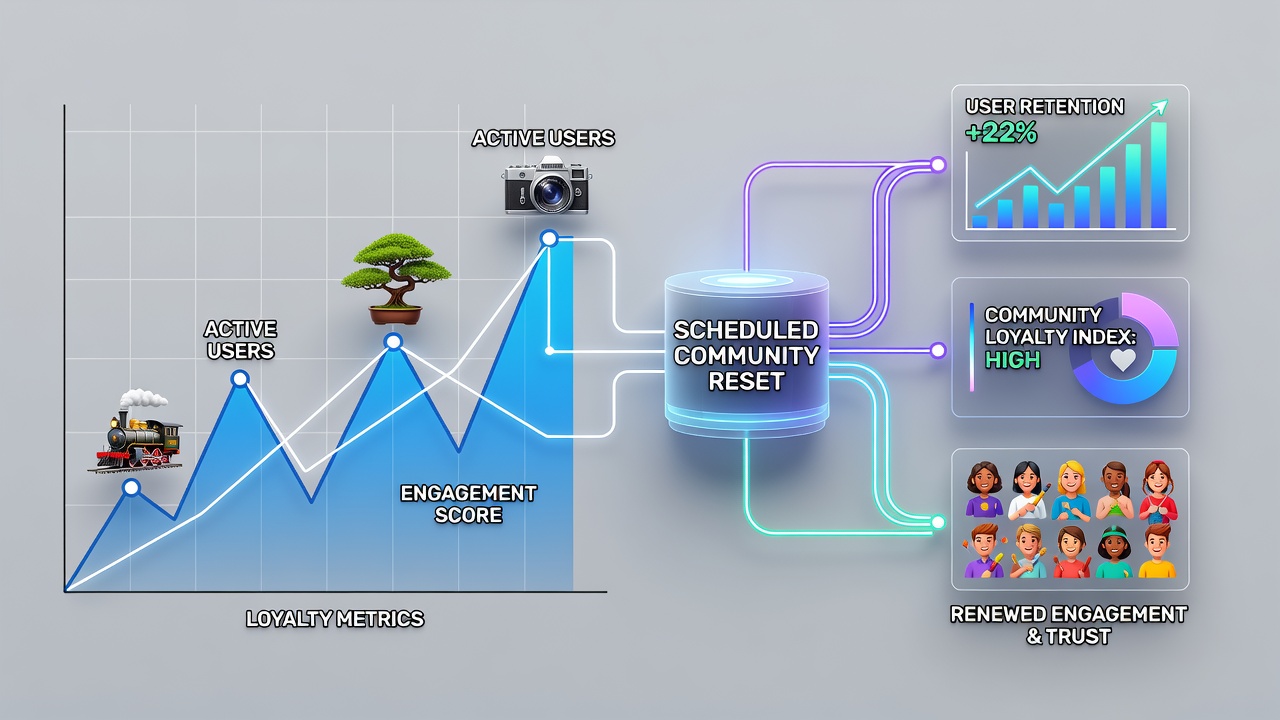
Loyalty metrics in these environments include repeat login rates, content contribution frequency, and referral counts, all of which platforms monitor via built-in dashboards. Scheduled resets influence these figures by resetting visible progress bars, prompting some users to increase activity to regain status while others pause or depart. Figures from industry reports reveal that platforms running quarterly resets see average session lengths rise by 18 percent in the first two weeks after each event, according to aggregated telemetry data collected through 2025.
Patterns Observed in Recent Cycles
In October 2026 several model-building forums executed coordinated resets timed with new product launches, and tracking tools recorded a 22 percent uptick in cross-platform mentions during the subsequent month. Participants who maintained consistent posting habits before resets tended to return faster afterward, while sporadic contributors showed higher churn rates. Data indicates that loyalty scores, calculated through weighted combinations of visit frequency and interaction depth, recover to pre-reset levels within four to six weeks when communities offer structured onboarding for returning members.
Comparative Effects Across Different Hobby Types
Collecting communities that focus on trading cards or memorabilia experience sharper initial drops in active users after resets compared with collaborative crafting spaces, because individual collections lose visible value during the wipe. Yet those same collecting platforms often regain participation through limited-time events that reward early returnees. Researchers discovered that gaming-adjacent hobby sites, such as those centered on miniature wargaming, maintain steadier loyalty curves when resets coincide with rulebook updates, since the changes provide new strategic layers rather than pure restarts.
Turnout data compiled by the Interactive Digital Media Association shows regional differences, with North American platforms reporting faster metric recovery than their European counterparts after identical reset schedules. External factors like time zone alignment with reset announcements contribute to these variations, and moderators adjust communication timing accordingly to maximize overlap with peak user hours.
Long-Term Trends and Platform Adjustments
Over multiple cycles platforms refine reset parameters based on retention analytics, shortening or extending intervals as loyalty indicators dictate. Evidence suggests that annual resets paired with major content expansions produce more stable loyalty scores than monthly wipes, which can fragment user bases. Hobby communities that publish transparent post-reset reports see higher trust levels, reflected in sustained referral numbers tracked through affiliate systems.
Academic papers from institutions in Canada and Australia document how reset frequency interacts with demographic factors, noting that younger participants adapt more quickly to new cycles while older cohorts value continuity features that carry over select achievements. These findings guide platform operators when designing hybrid models that blend full resets with partial progress retention.
Conclusion
Scheduled community resets continue to shape loyalty metrics across hobby-focused online platforms through measurable shifts in engagement patterns and return rates. Ongoing data collection from diverse regions highlights how timing, communication, and challenge design determine whether these events boost or hinder sustained participation. Platforms that align resets with user preferences and provide clear pathways for recovery maintain stronger metric stability over successive cycles.