Amir Richter · 4 October 2026
When calendars meet communities: how timed challenges reshape activity patterns in interest-specific digital spaces
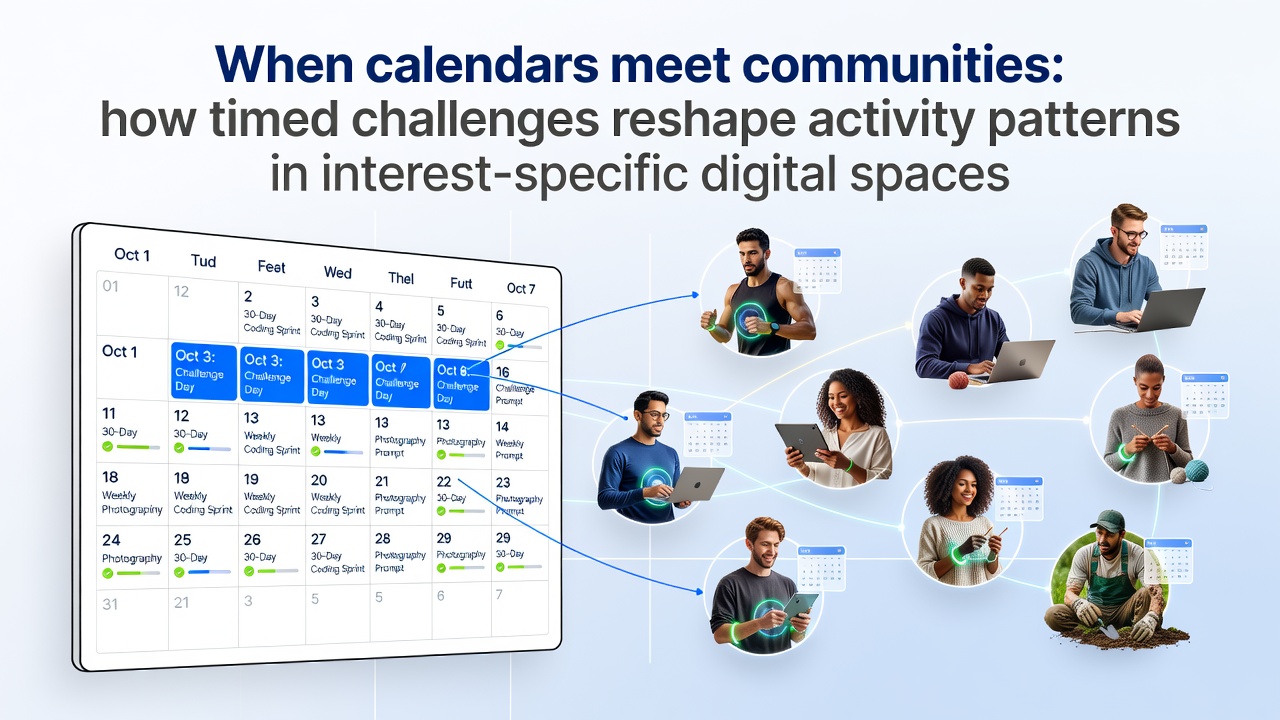
Interest-specific digital spaces have incorporated timed challenges for years, and these structured events now drive measurable shifts in when and how participants engage across platforms. Researchers tracking forums, servers, and apps dedicated to hobbies like model building, language learning, and indie game modding report consistent spikes in posts, comments, and resource sharing during defined challenge windows, while baseline activity outside those periods shows different rhythms. Data from multiple platforms indicates that these calendar-driven prompts compress participation into narrower timeframes yet extend overall monthly involvement for many users who return for subsequent rounds.
Mechanics of timed challenges across niche platforms
Platform operators and community moderators set recurring intervals that range from daily prompts to monthly themes, and these structures align user contributions with external calendars such as academic terms or seasonal events. In language exchange servers, for instance, weekly vocabulary marathons coincide with global holidays, prompting members to upload recordings and translations within 48-hour windows. Studies from the University of Melbourne have documented how such constraints alter posting timestamps, concentrating activity in evening hours for users in certain time zones while morning clusters appear among participants in others. The result appears in aggregated logs as repeated peaks rather than steady daily flows, with off-challenge periods showing reduced but stable contributions from core members.
Moderators in crafting communities apply similar approaches when they launch 30-day project sprints tied to material availability or supply chain cycles, and participants often schedule material purchases and progress updates to match those deadlines. Activity heatmaps generated by server analytics reveal that upload volumes double or triple during the first and final weeks of each sprint, while mid-cycle days maintain lower yet consistent check-ins for troubleshooting threads. Observers note that these patterns hold across both large public servers and smaller invite-only groups, suggesting the timing mechanism itself influences behavior more than group size alone.
Observed shifts in participation timing and volume
Longitudinal data collected between 2023 and 2025 across several hobby networks shows that timed challenges increase total unique contributors per month while redistributing their activity into event-aligned bursts. In one tracked photography collective, daily theme submissions raised average daily posts from 12 to 47 during challenge weeks, with weekend submissions accounting for 62 percent of the increase according to internal platform metrics. Users who joined mid-challenge tended to cluster their initial posts within the remaining days rather than spreading effort evenly, creating secondary peaks near deadlines. Similar redistribution appears in fitness tracking apps where monthly step challenges produce weekday evening surges and weekend morning plateaus that differ from non-challenge baselines.
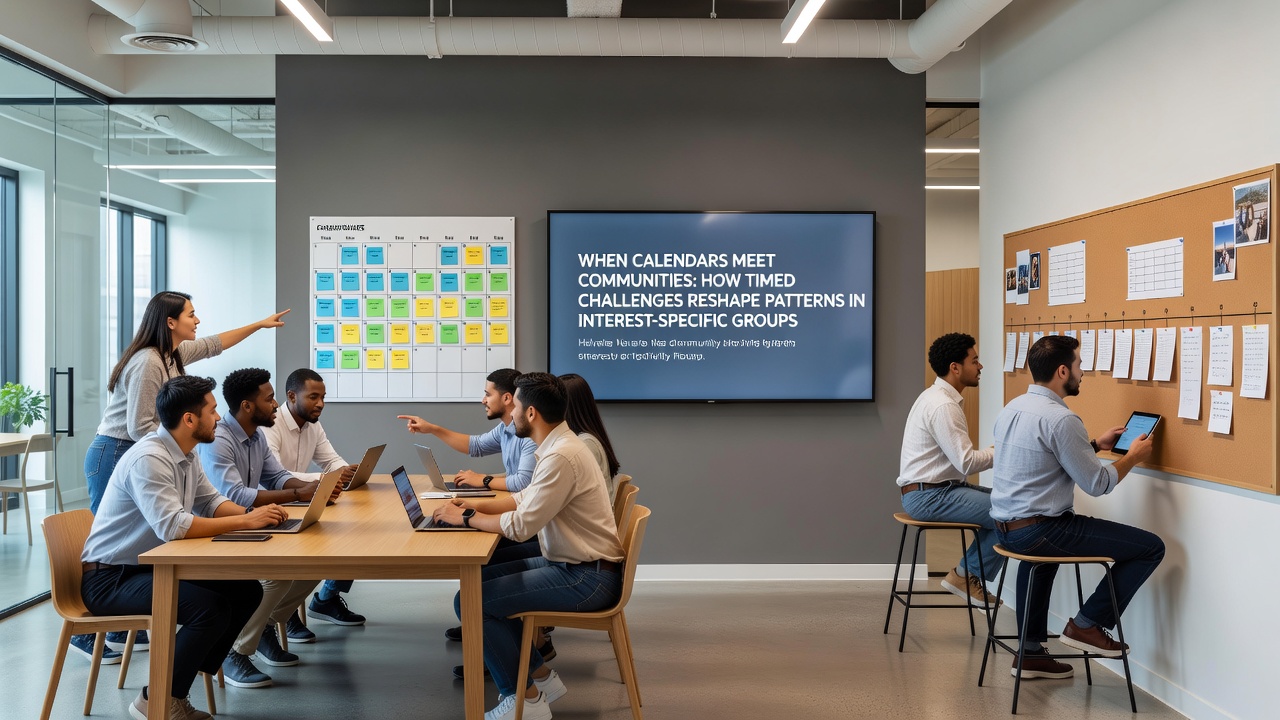
Canadian government statistical releases on digital leisure activities have recorded parallel trends in volunteer-driven online groups, where event calendars correlate with higher session durations during active periods yet shorter individual visits between events. Participants return more frequently overall because the next scheduled round provides a clear re-entry point, and this cycle sustains membership retention figures above those seen in unstructured discussion threads. European research consortia tracking open-source creative projects report analogous calendar effects, noting that release-tied challenges compress code commits into the final 10 days of each cycle while documentation and testing contributions spread more evenly throughout.
Regional variations and platform responses
Time zone distribution within global communities further shapes these patterns, and moderators in Australian and New Zealand based groups have adjusted challenge start times to accommodate northern hemisphere participants without losing local engagement. Platform tools now include scheduling features that let users pre-commit to specific challenge segments, and adoption data from major servers shows these options used by roughly one third of active members. The Australian Bureau of Statistics digital participation surveys indicate that such flexibility correlates with broader geographic reach in niche interest groups, particularly those centered on astronomy observation or regional cuisine recreation where real-world timing constraints intersect with online deadlines.
October 2026 brings several overlapping challenge cycles across multiple platforms, including annual game jam events and seasonal craft-along series that communities have run for consecutive years. Early registration numbers shared by organizers suggest participation volumes continuing the upward trajectory observed since 2024, with activity logs expected to show compressed evening clusters in European and Asian time zones alongside extended weekend windows in the Americas. Platform operators have responded by adding reminder systems and progress trackers that reinforce the calendar structure without altering core community rules.
Conclusion
Timed challenges function as recurring anchors that reorder activity within interest-specific digital spaces, and available platform data together with academic and governmental tracking confirm measurable changes in posting timing, session length, and return frequency. These shifts appear consistently across hobby categories and geographic regions, driven by the alignment of user contributions with predefined intervals rather than by any single platform feature. As communities continue to layer additional calendar events, the resulting activity patterns remain tied to the structure of those events themselves.